
Layout Design, its like fitting a wedding dress. Death by a thousand adjustments. and so it was that Jordan came to me and asked if we could make some adjustments based on the module sizes he had choosen.

So this was how we left things last time. Jordan wanted to build the switching penisula first and so wanted to add to that design. There were other changes too as the module would now be in two sections one 36×24″ and the other 48″x24″. Jordan wanted me to include a run round and a straight section to allow a temporary staging track to be added so that the pennisula can be operated independantly.
I asked Jordan to find some sandborn maps of the location he wanted to model so that we could look to add some real industries based on the prototype location. This is what he shared with me: you can find a original here
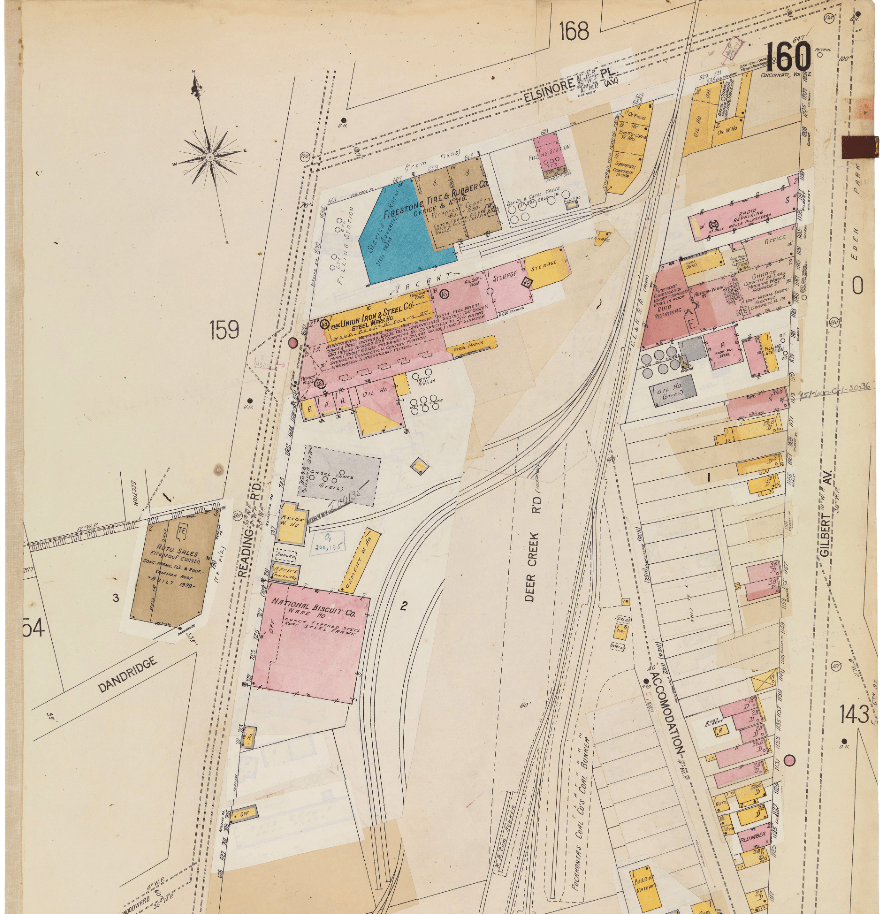
There are three industries we picked out to model. The National Biscuit Company located on the left of the map just down from the center.The Gas Station which was rail served located on Elsinore Place at the top centre of the map. Then finally the coal drops or as they are called on the map ‘bunkers’ which belong to two seperate companies.
We are not aiming for a perfect representation of the prototype location here so lets look at the industries we modeled in real life and on the layout design.
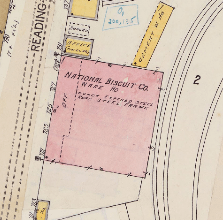

On the layout we had to model National Biscuit as a background flat. When the layout is used stand alone the second track in front of the main loading/unloading track for National Biscuit isn’t used as car spots but in the future when the whole plan is built it can be. Thus this industry doesn;t take up alot of space but does give 4/5 car spots.
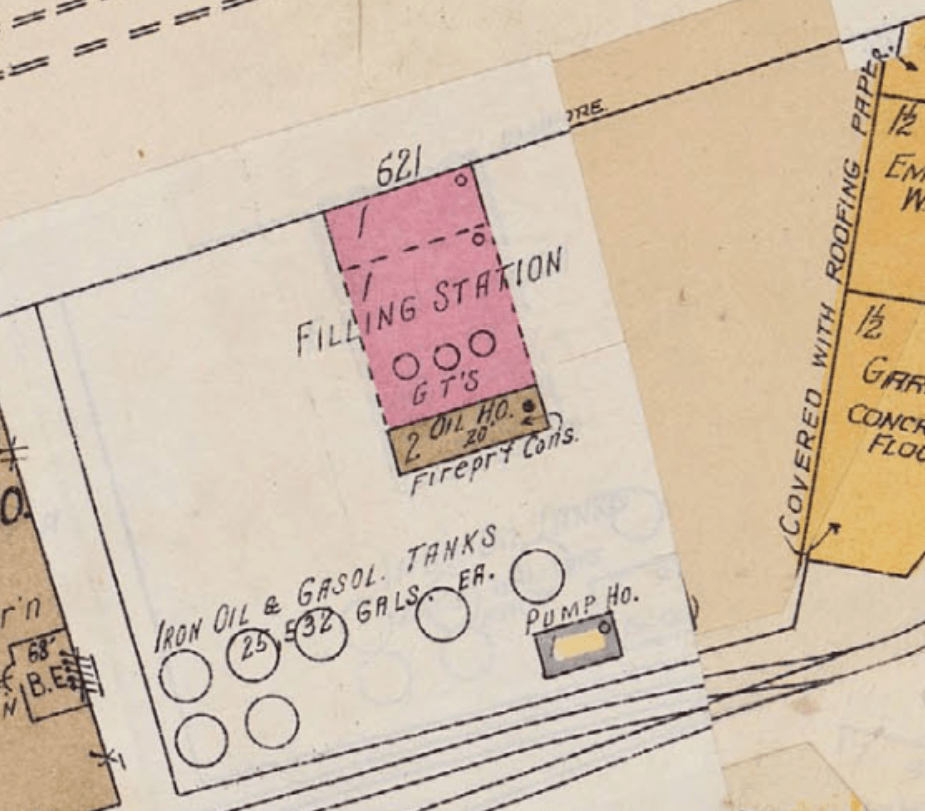
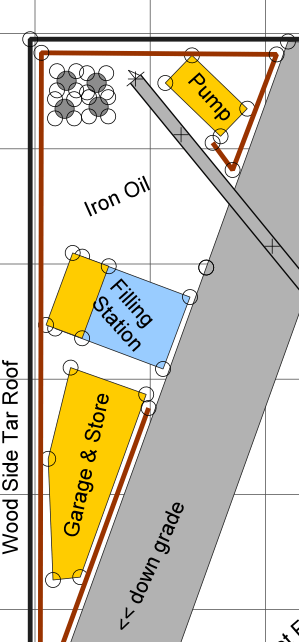
So on the layout Iron Oil occupies the corner and includes a Gas station and the store & workshop buildings seen on the sandborn map. The track crosses the street though to serve the oil storage tanks at the rear of the lot. This should add a single spot for a tank car with the crew having to flag the crossing of the street slowing down operations.
OK finally lets look at those coal trestles, a signature feature of any 1920’s city where most heating and cooking would be from coal fires, even in apartment buildings.
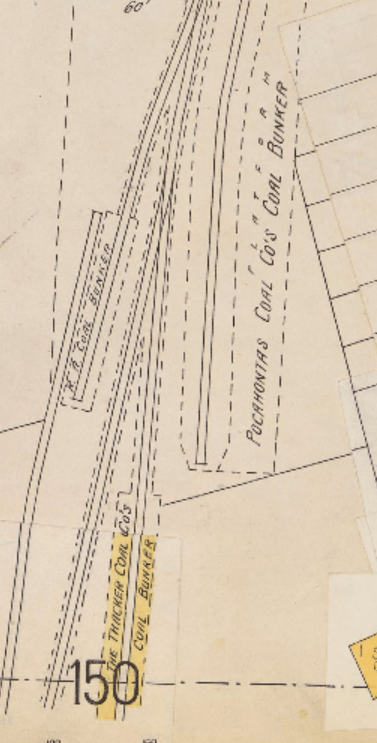
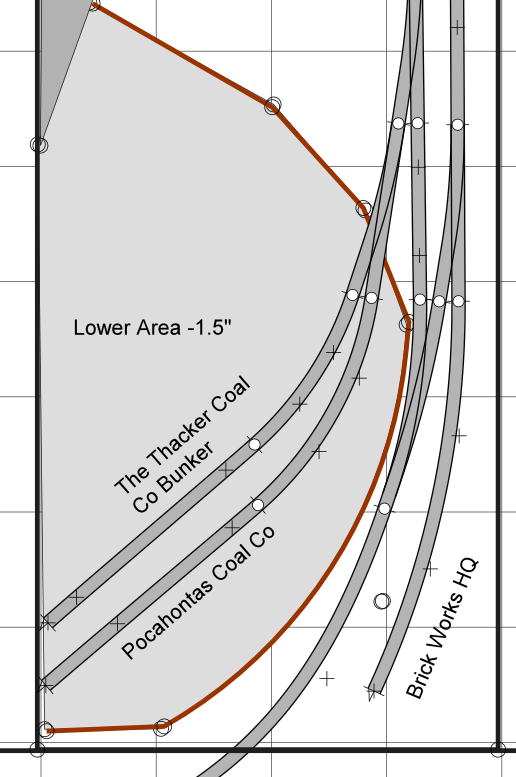
On the layout we’ve been able to model both trestles but side by side. The area around them will need to be lowered so a retaining wall will be added (shown in red) to enhance the scene. It will be upto Jordan to decide if this wall is brick or stone. So more research needed to dig out some photographs to help with planning the scenery before construction can commence.
Finally we added a vacant lot and also a place for the Brick Works downtown unloading area . The vacant lot to help set the scene in 1920 when the city was still mostly under construction and the Brickworks to add another three car spots. If the Brickworks is omitted in the first iteration of the plan it will give Jordan somewhere to store his train between sessions and he wouldn’t need the switching stick.
Right well lets look at the overall plan for this section of the layout now.

Pretty cool eh! well we also designed another part of the layout in more detail but that can wait for a future post. Hopefully the postie has brought me more materials and we can crack on with the Waukesha Sub in the coming weeks.
 Gordy's | Model Railroads